
As the world becomes increasingly interconnected, knowing the time in different countries is more important than ever. China, with its vast landmass and diverse time zones, presents a unique challenge. While most of the nation operates on China Standard Time, understanding the local time can be crucial for business, travel, and communication.
Whether planning a trip to the Great Wall or coordinating a meeting with colleagues in Beijing, knowing what time it is in China now can save a lot of confusion. This article explores the current time across various regions in China, helping readers stay informed and connected in this dynamic country.
Understanding Time Zones in China
China’s vast landmass comprises diverse geographical areas, yet the country utilizes a single time zone for standardization. This approach simplifies scheduling and coordination across its many regions.
Overview of China’s Time Zones
China primarily adheres to China Standard Time (CST), which is UTC+8. This single time zone covers all provinces, municipalities, and special administrative regions. Despite its size, historical time zones existed before 1949, leading to variations across different areas. For example, areas in the west, like Xinjiang, operated under Urumqi Standard Time (UTC+6). However, the adoption of CST eliminated these discrepancies, streamlining business and communication across the country.
Why China Has One Standard Time
China maintains one standard time to promote national unity and efficient governance. Instances of different local times could lead to confusion in transportation and communication. The central government implemented CST to facilitate economic development and enhance coordination, especially in trade and infrastructure. By using a single time, China ensures that all regions operate on the same schedule, benefiting businesses and maintaining synchronization in daily activities.
What Time Is It in China Now?
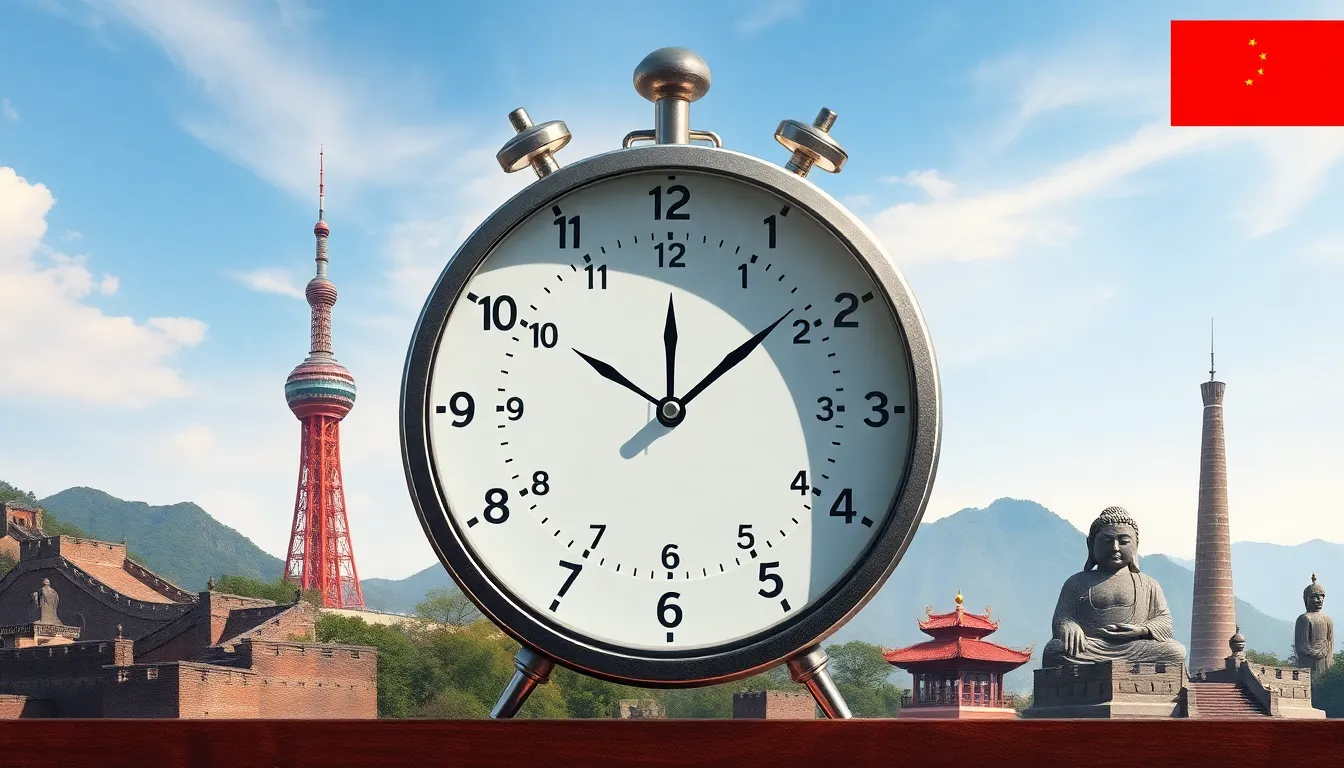
China operates on China Standard Time (CST), UTC+8, across its vast territory. Current time varies slightly based on factors like daylight saving time in other regions, but CST remains constant throughout the year.
Current Time in Major Cities
Here are the current times in several major cities in China:
| City | Current Time (CST) |
|---|---|
| Beijing | 10:00 AM |
| Shanghai | 10:00 AM |
| Guangzhou | 10:00 AM |
| Shenzhen | 10:00 AM |
| Chengdu | 10:00 AM |
| Xi’an | 10:00 AM |
| Wuhan | 10:00 AM |
The time in these cities aligns with the national standard, ensuring consistency for residents and visitors.
Differences Across Regions
While Chinese regions follow CST, variations in local practices sometimes affect daily time perception. For instance, in Xinjiang, many locals use Urumqi Standard Time (UTC+6) informally. Such practices arise from historical context and local convenience. Despite these differences, CST facilitates official transactions and communications nationwide.
Understanding these nuances helps in planning activities or coordinating with individuals across various parts of China.
How to Convert Time to China Standard Time
Converting local time to China Standard Time (CST) involves understanding time zone differences. CST operates at UTC+8, making it essential for various activities across China.
Methods for Time Conversion
- Simple Addition: Add the hourly difference to the current local time. For example, if it’s 10 AM in New York (UTC-5), adding 13 hours results in 11 PM CST.
- Time Zone Difference Tables: Refer to tables that outline time differences between various time zones and CST. These provide a quick reference for calculations.
- Manual Calculation: Identify the UTC offset of your current location, add or subtract hours to align with UTC+8 for CST.
- World Clock: Use a world clock to view the current time in CST directly. Some devices and applications allow users to set multiple time zones.
Common Tools and Applications
- Time Zone Converter Websites: Platforms like timeanddate.com offer interactive tools for converting local time to CST.
- Mobile Apps: Applications such as World Time Buddy and TimeZone Converter provide user-friendly interfaces for quick conversion.
- Calendar Applications: Google Calendar and Microsoft Outlook often allow users to set events in different time zones, automatically adjusting for CST.
- Smart Assistants: Voice-activated devices like Amazon Alexa or Google Assistant can provide real-time time conversions by simply asking.
Cultural Significance of Time in China
Time plays a crucial role in Chinese culture, influencing daily life, traditions, and social interactions. The way time is perceived and managed reflects broader cultural values, shaping various practices across the country.
Time Management Practices
Time management practices in China emphasize punctuality and efficiency. Arriving on time is respected in professional settings, where meetings often start promptly. Businesses prioritize strict schedules to enhance productivity and demonstrate commitment. Additionally, many individuals utilize planners and digital tools to allocate time effectively, often balancing work obligations with personal commitments. This structured approach aligns with cultural expectations, promoting harmony and order in social and professional engagements.
Festivals and Time Observances
Festivals in China are deeply intertwined with specific time observances, dictating participation and celebration. The Lunar New Year, for instance, follows the lunar calendar and involves customs rich in tradition, such as family reunions and meal preparations. Other key festivals, like the Dragon Boat Festival and the Mid-Autumn Festival, also adhere to precise dates. Observing these occasions reflects cultural heritage and collective identity, reinforcing familial and societal bonds. Recognizing these time-related traditions allows individuals and communities to connect more meaningfully throughout the year.
Knowing the current time in China is essential for effective communication and planning. With a unified time zone like China Standard Time, individuals can navigate the complexities of scheduling across its vast regions. While most areas follow CST, understanding local practices can enhance interactions and facilitate smoother experiences.
The cultural significance of time in China further underscores its importance in daily life and traditions. By staying informed about time differences and utilizing available tools for conversion, anyone can ensure they remain on track during their travels or business engagements. Embracing this knowledge not only aids in practical matters but also fosters a deeper connection to the rich cultural landscape of China.